- +49 176 82095095
- info@ffdpowergermany.de
- Mo. - Fr. : 9:00 - 17:30

60kW / 215kWh BESS with 50kWp Photovoltaic System for a 100kW Load Operating 6 Hours Daily in Haarlem, the Netherlands
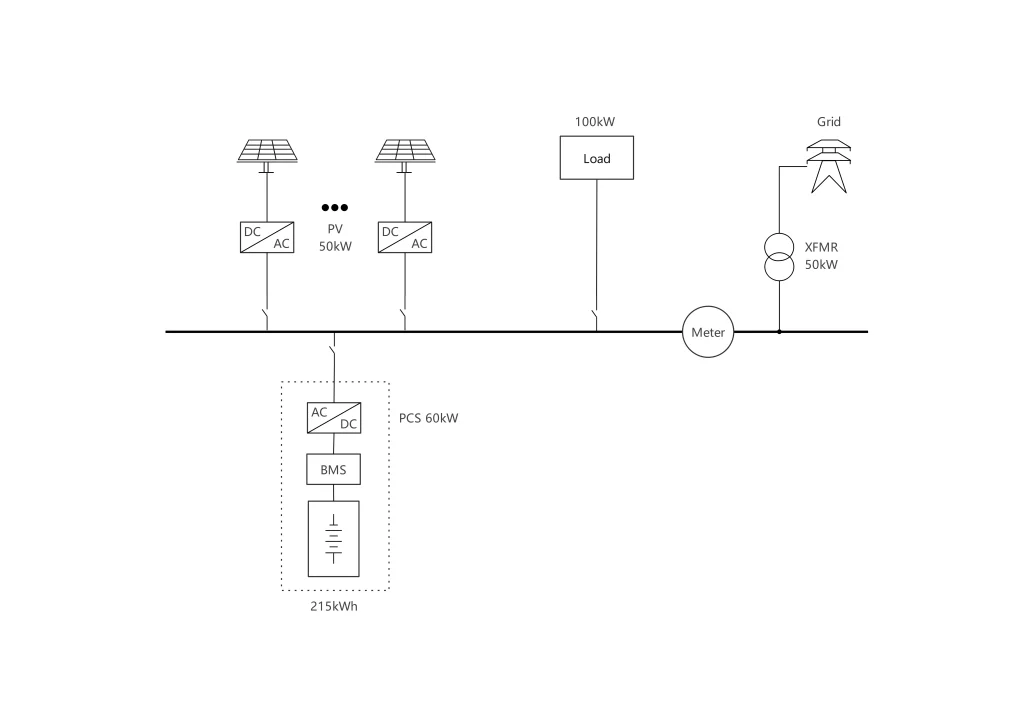
In this scenario, the 50kWp photovoltaic (PV) system directly powers a 100kW load operating at full capacity for 6 hours during daylight. Notably, there’s a grid restriction of 50kW, and exporting excess energy back to the grid incurs penalties. Therefore, immediate consumption of the generated solar power is both mandatory and optimal given the system’s constraints and load requirements.
Given the circumstances, an AC coupling method is ideal for this PV system. With a peak capacity of only 50kWp against a 100kW load, the system inherently lacks surplus energy for storage. However, the grid’s 50kW supply limit and the operational requirement of 6 hours daily necessitate the use of a Battery Energy Storage System (BESS).
The BESS will charge from the grid during off-peak hours and discharge during peak daylight hours to support the load. This is crucial because the PV system alone cannot consistently deliver the full 50kW needed to complement the grid’s maximum supply of 50kW, particularly under Haarlem’s average sunlight conditions, which equate to only about 2.5 hours of peak output. This results in approximately 3.5 hours of energy deficit each day that the BESS needs to compensate for, ensuring smooth and uninterrupted operation. Thus, the combination of the PV system with BESS not only ensures compliance with grid limitations but also maximizes energy efficiency, guaranteeing that the system meets the daily operational demands efficiently and sustainably.
WhatsApp us