- +49 176 82095095
- info@ffdpowergermany.de
- Mo. - Fr. : 9:00 - 17:30

FFD POWER delivers a fully integrated turnkey microgrid solution designed for commercial and industrial applications. Our system seamlessly combines onsite power generation (solar, wind, or diesel generators) with an advanced Battery Energy Storage System (BESS) and intelligent controls. This plug-and-play solution can operate both off-grid and grid-tied, ensuring reliable and efficient energy management.
When solar or wind generation is sufficient, it powers the load directly and charges the battery.
If both solar and wind are available, the system prioritizes the source with higher output.
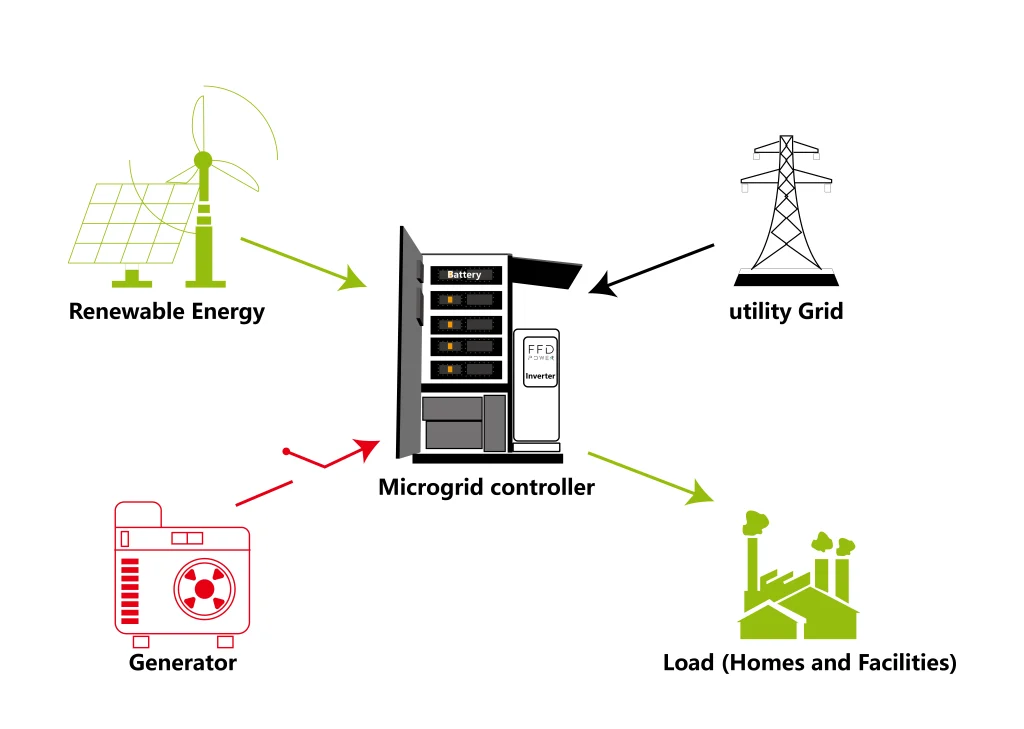
When renewable generation (solar or wind) is insufficient, the battery supplies the difference between the load demand and available renewable power.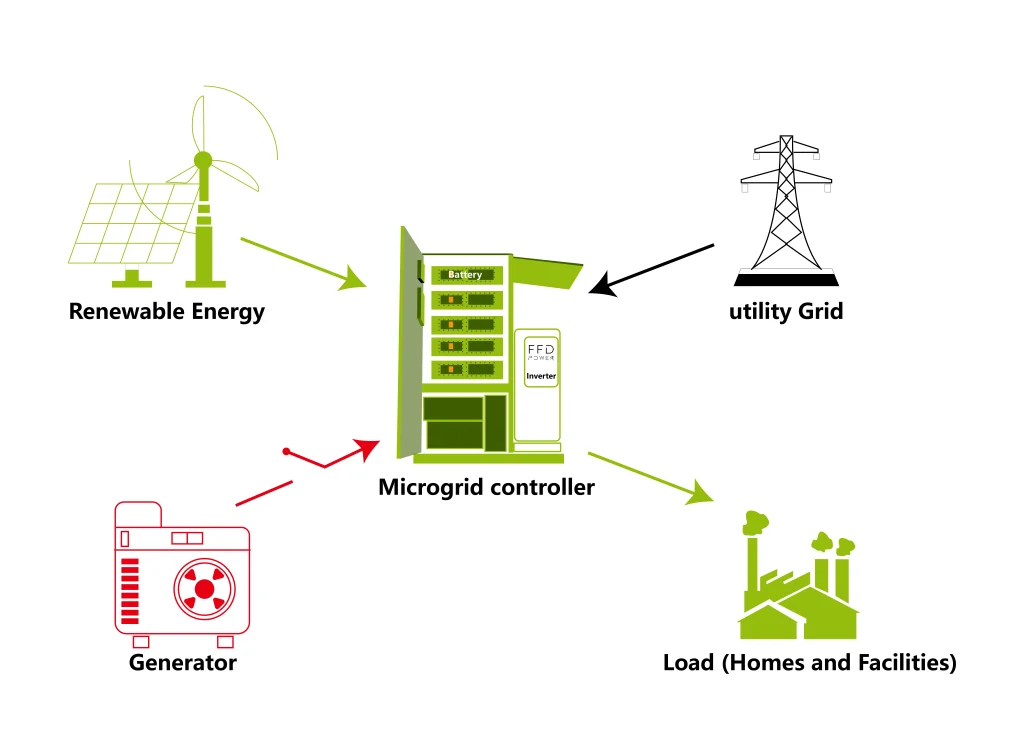
When there is no solar or wind generation, the battery powers all loads.
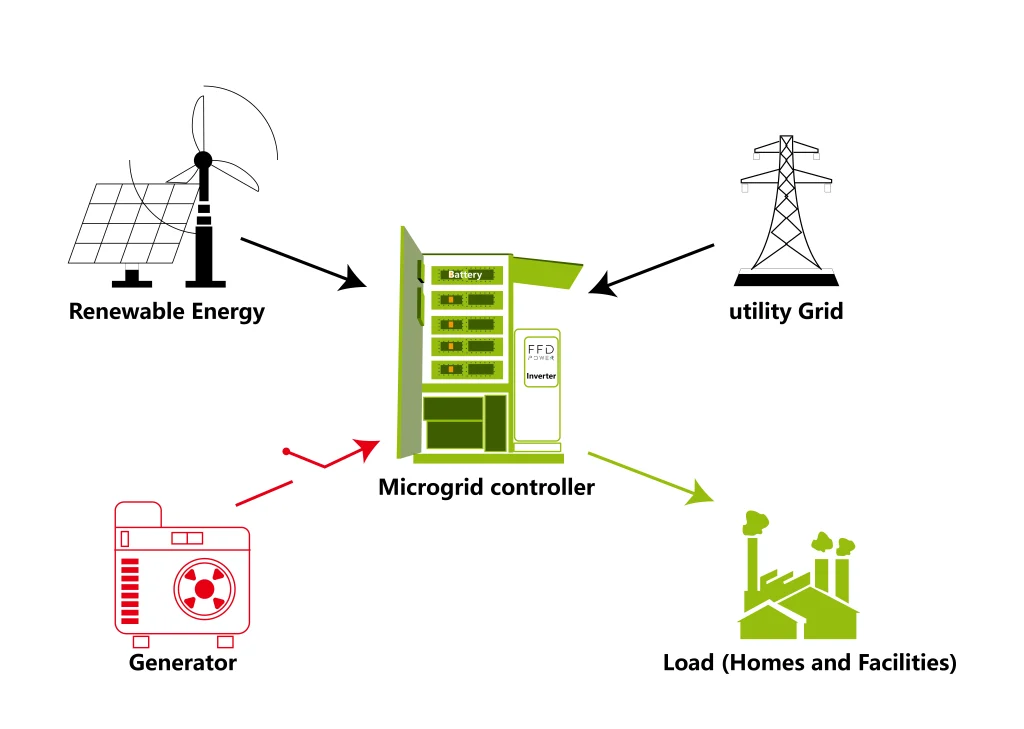
If the battery is depleted and renewable generation is unavailable, the system switches to grid power.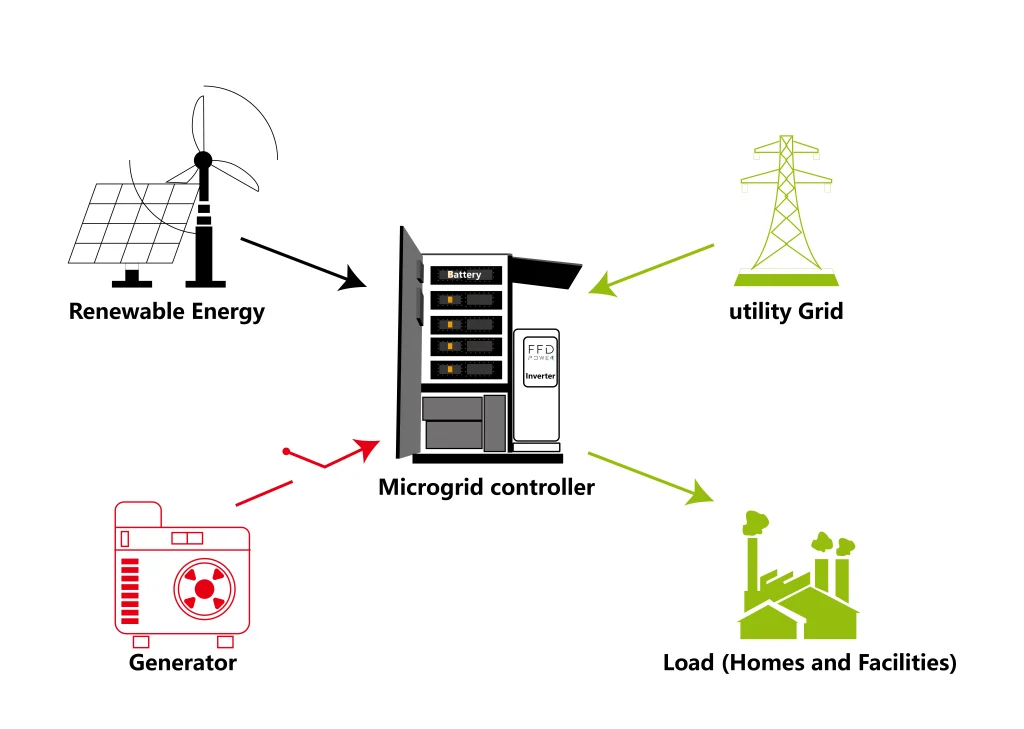
During grid outages or when renewable energy and battery storage are exhausted, the diesel generator ensures uninterrupted power supply.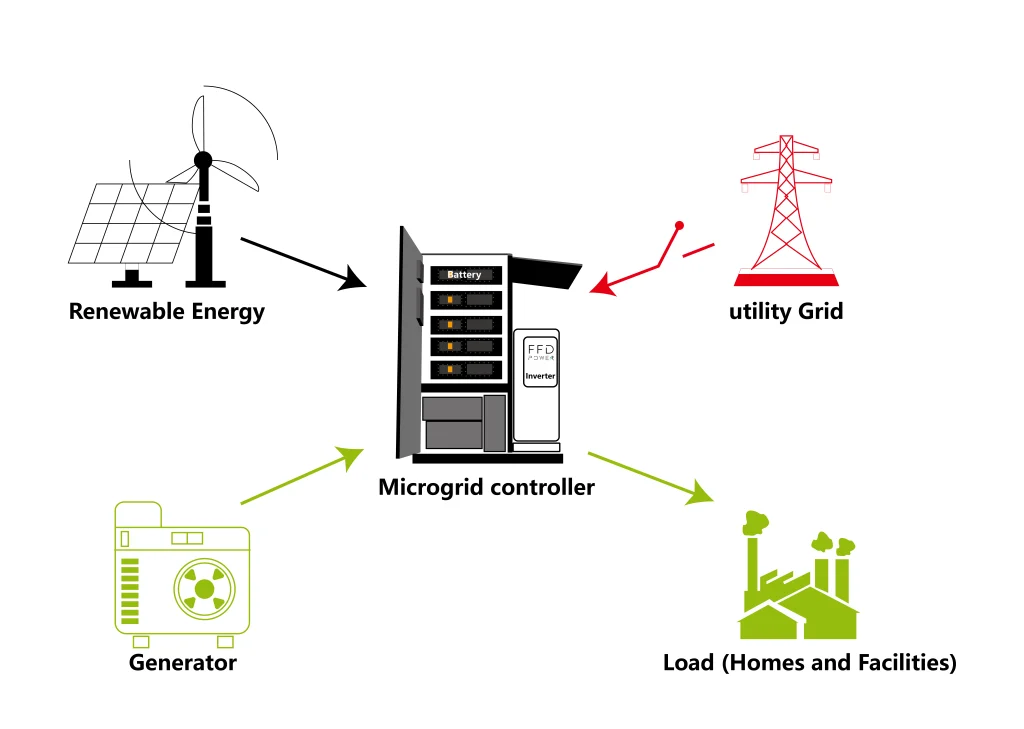
Our all-in-one microgrid cabinet offers 3 distinct battery configurations to suit your specific energy needs. You can choose between:
With MPPT, inverter, EMS, and inputs for gas/diesel generators and wind turbines all in one enclosure, this system is highly adaptable. Scaling up is as easy as adding cabinets in parallel, for a total capacity of up to 300 kW output. Whether you prioritize longer discharge times or faster cycling, air cooling or liquid cooling, our customizable solution ensures reliable, efficient power management in a single, streamlined package.
Generation access
Single unit parameter :
Main Function :


Split Microgrid Solution is fully customizable, enabling any charging or discharging rate up to 1C to meet specific project requirements. Multiple battery cabinets can be coupled on the DC side—scaling capacity to 8 MWh or more—alongside dedicated PCS, PV, and switch cabinets. This modular design provides maximum flexibility and performance for both smaller installations and large-scale energy projects.
Generation access
Maximum System Configuration
Main Function :


The Mega Microgrid solution, developed by Kehua and FFD Power, is a highly customizable and scalable microgrid system designed to meet diverse energy needs. By integrating Kehua’s off-grid power converting system with FFD Power’s 5 MWh containerized battery storage system, this solution enables the creation of robust microgrid systems capable of delivering up to 50 MW of power and 150 MWh of energy storage.
Generation access
Single unit parameter :
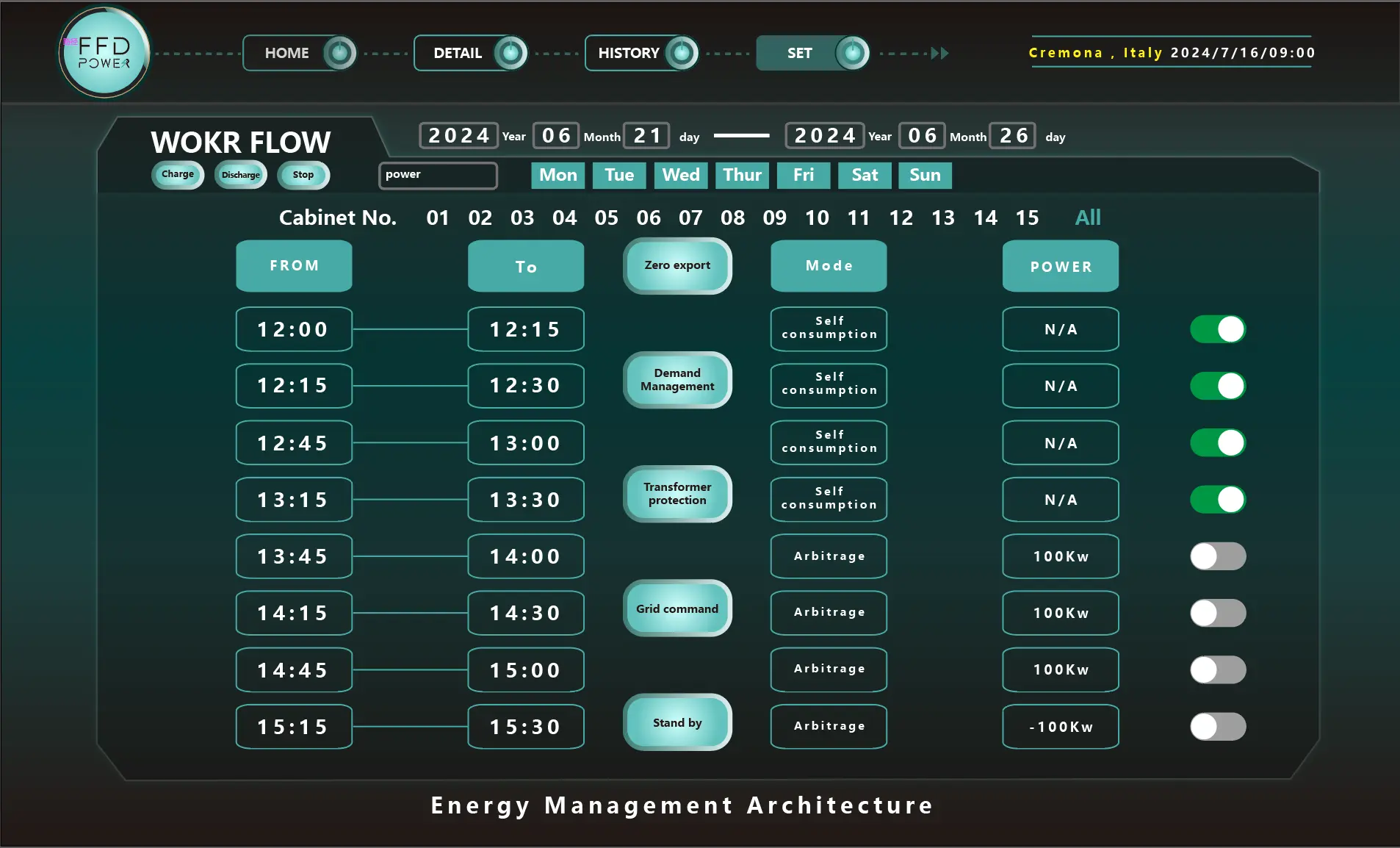
By fine-tuning the Energy Management Architecture (EMA) settings, the system becomes a versatile solution for addressing various energy concerns. This adaptability allows users to precisely navigate and resolve diverse energy challenges, ensuring optimal performance and efficiency. Whether optimizing power distribution, managing grid interactions, or responding to varying energy demands, the configurable EMA provides a dynamic and comprehensive solution to alleviate your energy worries.
At FFD Power, we specialize in delivering advanced Battery Energy Storage System (BESS) solutions designed to meet the demands of various applications, including peak-valley arbitrage, renewable energy integration, demand response, grid enhancement, and microgrids. Our expertise also extends to the most challenging BESS application—Frequency Containment Reserve (FCR).
Why FCR is Different
Frequency Containment Reserve (FCR) is crucial for maintaining grid stability, requiring precise and rapid response capabilities. Unlike other applications that may focus on energy optimization or integration, FCR demands highly specialized technology and intricate algorithms to keep the grid balanced in real-time. The complexity involved in managing FCR can be daunting, but this is where we excel.
Our Ready-to-Use FCR Solution
At FFD Power, we simplify the complexities of FCR by integrating our advanced Energy Management Architecture (EMA) with Kehua’s Power Conversion System (PCS). Our pre-installed solution is designed to be turnkey, providing everything needed to implement FCR effortlessly. This ready-to-use package ensures seamless operation, compliance with grid standards, and the reliability required to support critical aspects of grid stability.
Our BESS can remain connected to the grid and continue operating with a frequency change rate of up to 1.7 Hz/s.
Our BESS can adjust active power when the frequency deviates beyond the insensitivity zone of 50.2 Hz to 50.5 Hz, with a static range of 0.1% to 12%. The static setting should be adjusted in the EMS.
It is capable of responding to frequency deviations with a delay of no more than 300 ms, measured at the inverter output.
Our BESS can adjust active power when the frequency deviates beyond the insensitivity zone of 49.8 Hz to 49.5 Hz, with a static range of 0.1% to 12%. The static setting should be adjusted in the EMS.
It is capable of responding to frequency deviations with a delay of no more than 300 ms, measured at the inverter output.
Our BESS is equipped with an interface (input port) that allows for the adjustment of active power output within 10 seconds of receiving a command at the input port.
Our BESS can automatically reconnect to the grid after an unplanned outage or during transmission system recovery under the following conditions:
Our BESS is capable of remaining connected to the grid and operating effectively at a frequency change rate of up to 1.7 Hz/s.
Our BESS is capable of maintaining stable operation during short-circuits, considering the actual line voltage values relative to the mains voltage level at the point of connection, both before and after the fault.
Our BESS is capable of generating reactive power within its technical capacity, should such a requirement be established by the Transmission System Operator (TSO).
Our BESS is equipped with a Power Oscillation Damping (POD) function, specifically designed to stabilize and dampen power fluctuations in the grid.
In industrial and commercial energy storage systems, peak-valley arbitrage involves leveraging energy storage technology to capitalize on fluctuations in electricity prices. The system charges during periods of low electricity demand, which typically come with lower prices, and discharges stored energy during peak demand, when prices are higher. This strategy allows users to take advantage of price spreads and achieve economic benefits. Additionally, peak-valley arbitrage not only reduces electricity costs but also enhances the stability and reliability of the power system.
Traditionally, the capacity of a user’s transformer is fixed. When operating at overload capacity for a specific period, the conventional approach is to expand the transformer’s capacity. However, by installing a compatible energy storage system and charging it using surplus transformer capacity or other integrated power sources, such as photovoltaics, you can release stored energy during overload periods. This approach reduces the transformer’s load and effectively overcomes grid limits, thus avoiding or mitigating the costs associated with transformer capacity expansion.
Renewable energy sources, such as photovoltaic (PV) systems and wind turbines, often experience fluctuations in power output, which can be challenging for grid operators. This can lead to issues like energy dumping or output restrictions. However, integrating an energy storage system (ESS) allows PV and wind farms to operate at their full potential. Excess energy that might otherwise be wasted can be stored in the ESS and released during periods of lower output, ensuring a stable power supply. In addition to smoothing renewable energy output, the ESS can store energy generated during low-price periods and release it when prices rise, thereby increasing revenue for PV and wind farms.
A high-power emergency energy storage system represents a specialized segment within the new energy battery industry, often referred to as a “super-capacity power bank.” This system features high energy storage capacity and output power, and can be charged through the grid or photovoltaic systems during surplus electricity periods. In the event of grid failures or instability, the emergency energy storage system provides reliable power support in off-grid mode, ensuring continuous operation during emergencies. Its versatility extends to various applications, including residential and commercial settings, emergency response, hospital backup power, and power quality optimization.
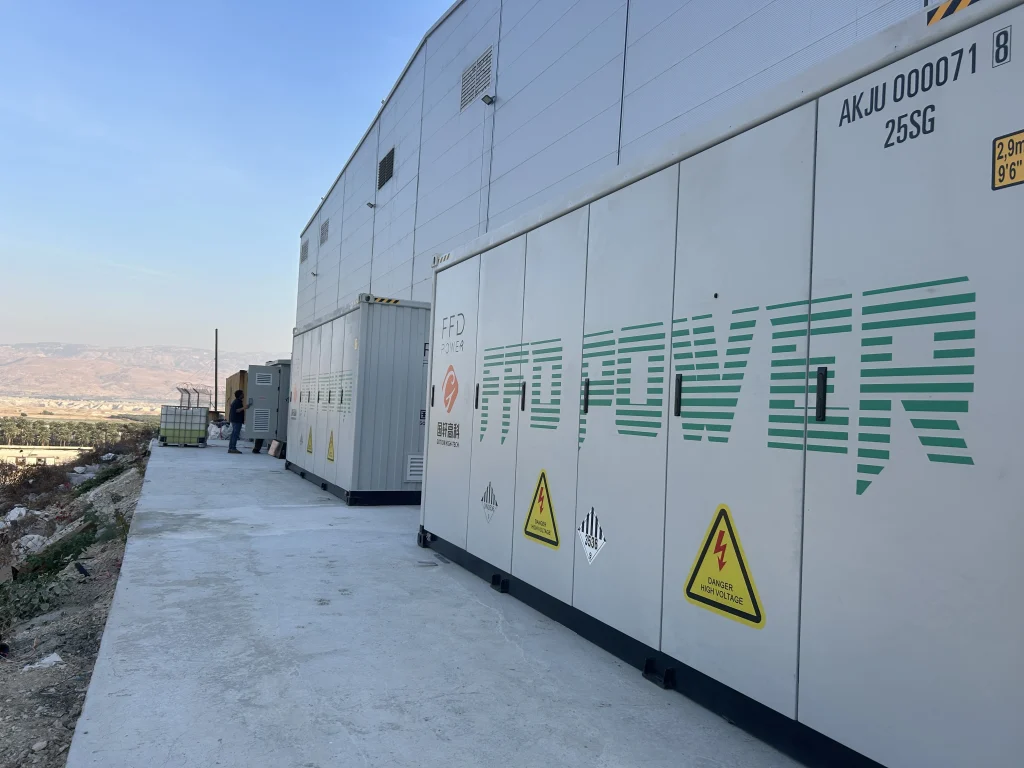
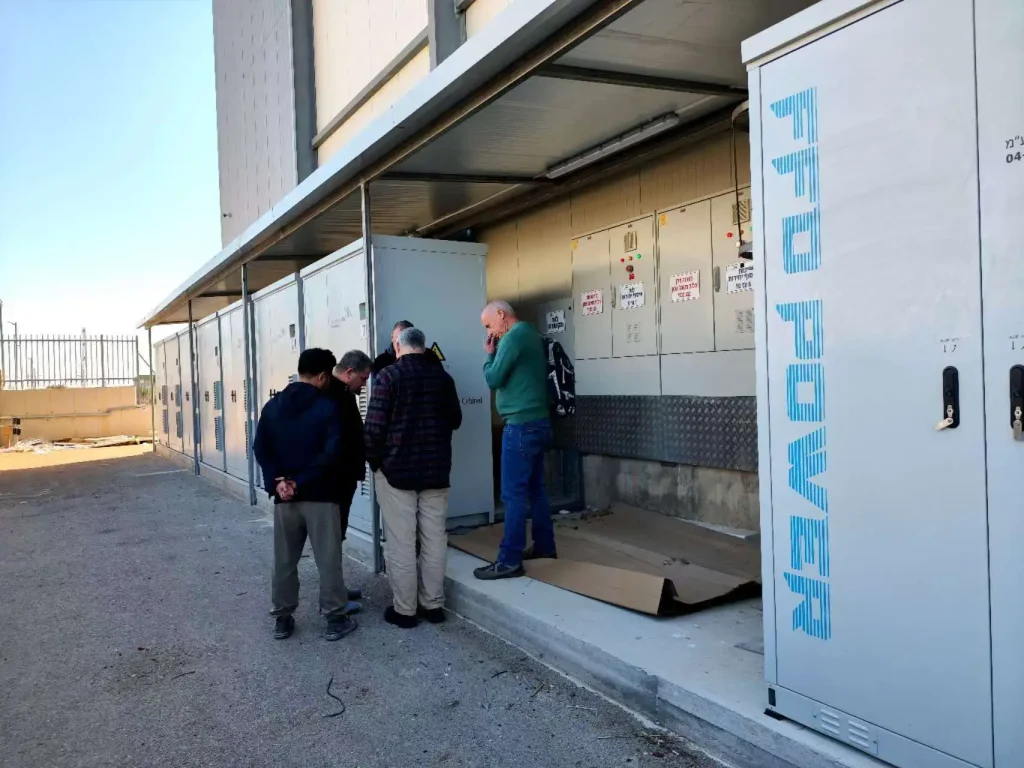
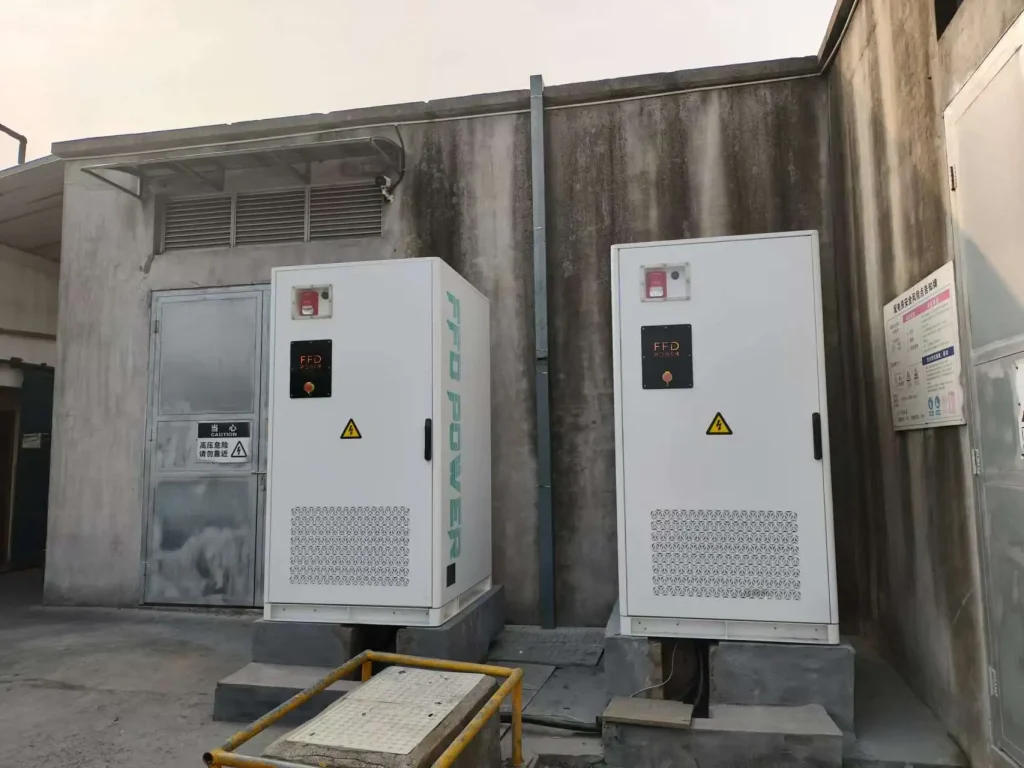
If you’re unfamiliar with Battery Energy Storage Systems (BESS), reach out to your nearest FFD partner using FFD POWER BESS—you might be pleasantly surprised by what you find.

Powered by FFD TEC CO.,LTD
WhatsApp us
